Advanced Endoscopic Treatment for Obesity Management
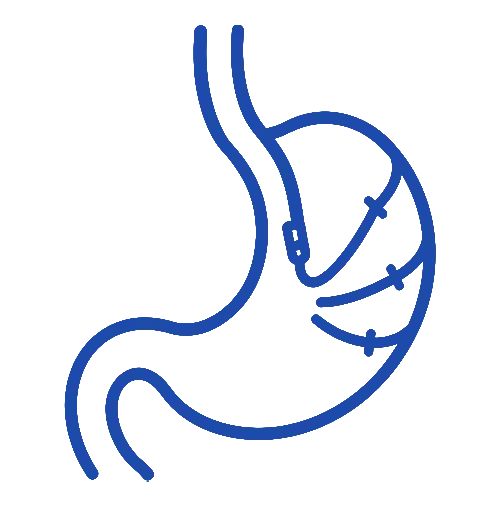
Endoscopic Sleeve Gastroplasty (ESG) is a minimally invasive procedure for the treatment of obesity that modifies the anatomy and capacity of the stomach using a full-thickness endoscopic suturing system.
Through an endoscope inserted through the mouth, strategically placed sutures are used to reduce and reshape the volume of the stomach, creating a configuration similar to a surgical sleeve gastrectomy, without abdominal incisions and without removing any portion of the stomach.
The reduction in stomach capacity helps decrease food intake and promotes an earlier feeling of fullness. The procedure should be part of a comprehensive obesity treatment program that includes medical and nutritional follow-up, as well as lifestyle and behavioral modifications.
ESG vs. Surgical Sleeve Gastrectomy
Although both techniques are designed to reduce stomach capacity, they are different procedures.
Sleeve gastrectomy is a laparoscopic surgical procedure in which approximately 70–80% of the stomach is removed.
With ESG, no portion of the stomach is removed. Instead, its volume is reduced using sutures placed endoscopically.
Potential Advantages of ESG Compared with Surgical Sleeve Gastrectomy
- No abdominal incisions: The procedure is performed entirely through an endoscopic approach.
- No gastric resection: The stomach is preserved, and no gastric tissue is removed.
- Less invasive: Because it does not involve abdominal surgery, it may allow for a faster recovery.
- Shorter recovery time: Many patients may return to their usual activities considerably sooner than after bariatric surgery.
- No gastric staple line: Because no portion of the stomach is removed, the staple line associated with sleeve gastrectomy is not created.
- Preservation of gastric anatomy: In selected patients, preserving the stomach may help maintain a broader range of future treatment options.
Does ESG Produce the Same Results as Sleeve Gastrectomy?
The two procedures should not be considered equivalent.
Available evidence shows that ESG can lead to clinically significant weight loss and improvements in various obesity-related conditions. However, the amount of weight loss may be lower than that achieved with certain bariatric surgical procedures.
The choice between ESG and bariatric surgery should be individualized based on BMI, obesity-related conditions, medical history, weight-loss goals, patient preferences, and a multidisciplinary evaluation.
Who May Be a Candidate for ESG?
ESG may be an option for selected patients with obesity who:
- Are seeking an endoscopic, less invasive treatment.
- Do not wish to undergo, or are not ideal candidates for, conventional bariatric surgery.
- Have had difficulty achieving sufficient weight loss through lifestyle changes alone.
- Require a structured approach to obesity treatment.
Eligibility should be determined after an individualized medical evaluation.
A Procedure Does Not Replace Comprehensive Treatment
ESG is one tool within the treatment of a chronic disease: obesity.
The best outcomes require ongoing medical follow-up and a comprehensive program that includes nutrition, physical activity, lifestyle and behavioral changes, and, when indicated, psychological support and pharmacologic treatment.
ESG, Sleeve Gastrectomy, or Intragastric Balloon?
There is no single procedure that is ideal for every patient.
The choice should be based on each person’s clinical characteristics and individual goals. During your evaluation, we review your overall health, BMI, medical history, expectations, and weight-loss goals to determine which strategy may offer the best balance of effectiveness, safety, and long-term outcomes.